

Student Tips: How to Survive Finals
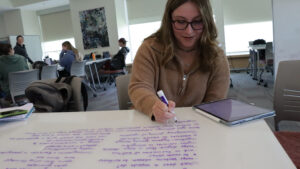
Congratulations, if you’re reading this, it means you’ve reached the end of your semester. You’ve made it past midterms, submitted assignment after assignment, and now stand face-to-face with the final boss of every semester: finals week. We asked Legende McGrath ’26 to share his tips on making it to the finish line.
Some students enter December with flexible final projects, extended papers, or presentations. Others face a heavier reality: multiple in-class, scheduled exams stacked tightly into just a few days. No matter which experience matches yours, feeling nervous is normal. What isn’t inevitable, though, is feeling overwhelmed or unprepared. Think of this post as your practical survival guide, written by someone who understands both the pressure and the payoff: a senior at Le Moyne College who has navigated this season enough times to know what genuinely helps.
Finals Week Tips for You
Research shows that planning academic work in advance significantly reduces stress and improves performance by changing tasks from abstract worries to structured actions.
Start by listing:
- Every final (exam, paper, or project)
- Format details: in-class, take-home, or project-based
- Due dates and scheduled times
Next, distribute the work into daily or multi-day study blocks. This method aligns with cognitive off-loading, a scientifically supported strategy where using planners or written task lists frees mental capacity for deeper focus and execution.
Finals will carry the mental weight you assign to them. When they live on a calendar or task list, not just in your head, they feel conquerable, not chaotic.
Research shows that planning academic work in advance significantly reduces stress and improves performance by changing tasks from abstract worries to structured actions.
Start by listing:
- Every final (exam, paper, or project)
- Format details: in-class, take-home, or project-based
- Due dates and scheduled times
Next, distribute the work into daily or multi-day study blocks. This method aligns with cognitive off-loading, a scientifically supported strategy where using planners or written task lists frees mental capacity for deeper focus and execution.
Finals will carry the mental weight you assign to them. When they live on a calendar or task list, not just in your head, they feel conquerable, not chaotic.
Studies in cognitive psychology and learning theory show that the brain retains information more effectively when studying happens in focused time intervals with regular breaks.
The 45/15 rule calls for:
- 45 minutes of focused studying or writing
- 15 minutes of rest or reset time
- Repeat
This format is comparable to methods like the “Pomodoro Technique,” which research supports as more efficient than cramming because short recovery windows restore focus and prevent mental fatigue from reducing comprehension and recall.
During the 15 minutes, you might stretch, take a walk, grab a snack, or briefly scroll social media. The key is stepping away, even for a moment: it restores your attention span, relieves the physical tension buildup that stress creates, and prepares you to re-engage sharper than before.
Studies in cognitive psychology and learning theory show that the brain retains information more effectively when studying happens in focused time intervals with regular breaks.
The 45/15 rule calls for:
- 45 minutes of focused studying or writing
- 15 minutes of rest or reset time
- Repeat
This format is comparable to methods like the “Pomodoro Technique,” which research supports as more efficient than cramming because short recovery windows restore focus and prevent mental fatigue from reducing comprehension and recall.
During the 15 minutes, you might stretch, take a walk, grab a snack, or briefly scroll social media. The key is stepping away, even for a moment: it restores your attention span, relieves the physical tension buildup that stress creates, and prepares you to re-engage sharper than before.
Coffee intake peaks during finals season across college campuses, and while caffeine provides a short-term energy boost, research shows it does not substitute for hydration or nutrition, both of which impact memory and sustained concentration more significantly.
Important facts:
- Mild dehydration can reduce attention, working memory, and cognitive processing
- Caffeine has diuretic effects, which increase fluid loss if not balanced with water
- High caffeine intake may elevate stress hormones and interfere with sleep, creating a counterproductive cycle
Instead of chaining coffees or energy drinks, prioritize sustainable study fuels:
- Water and electrolytes
- Protein-rich meals
- Nutrient-dense snacks: nuts, fruits, yogurt, whole-food options
Coffee isn’t the enemy here, but it works best as an assist, not your primary source of academic or existential support.
Coffee intake peaks during finals season across college campuses, and while caffeine provides a short-term energy boost, research shows it does not substitute for hydration or nutrition, both of which impact memory and sustained concentration more significantly.
Important facts:
- Mild dehydration can reduce attention, working memory, and cognitive processing
- Caffeine has diuretic effects, which increase fluid loss if not balanced with water
- High caffeine intake may elevate stress hormones and interfere with sleep, creating a counterproductive cycle
Instead of chaining coffees or energy drinks, prioritize sustainable study fuels:
- Water and electrolytes
- Protein-rich meals
- Nutrient-dense snacks: nuts, fruits, yogurt, whole-food options
Coffee isn’t the enemy here, but it works best as an assist, not your primary source of academic or existential support.
You hear it every year, but this one deserves repeating: sleep directly impacts academic performance, especially memory consolidation, focus, accuracy, and emotional regulation.
Without the recommended 6 to 8 hours of sleep, the brain struggles to:
- Convert short-term knowledge into long-term memory
- Sustain attention and recall during exams
- Regulate stress and maintain precision
All-nighter culture is sometimes glorified on college campuses, but it undermines cognition. Research is clear that sleep supports learning more than cramming replaces it.
Rest is not the thing you do after finals, it’s one of the tools that helps you succeed during them.
You hear it every year, but this one deserves repeating: sleep directly impacts academic performance, especially memory consolidation, focus, accuracy, and emotional regulation.
Without the recommended 6 to 8 hours of sleep, the brain struggles to:
- Convert short-term knowledge into long-term memory
- Sustain attention and recall during exams
- Regulate stress and maintain precision
All-nighter culture is sometimes glorified on college campuses, but it undermines cognition. Research is clear that sleep supports learning more than cramming replaces it.
Rest is not the thing you do after finals, it’s one of the tools that helps you succeed during them.
Humans are socially wired learners. Studying alone works for a portion of the process, but collaboration strengthens:
- Long-term recall: teaching concepts to others reinforces retention
- Accountability: peers help interrupt procrastination
- Emotional resilience: shared experiences reduce isolation and stress
Find a study buddy or group. Compare notes, quiz each other, explain concepts back and forth. It also won’t kill your productivity to add humor now and then. Laughter doesn’t derail finals success, it releases tension and reminds your brain there is life outside scantrons, syllabi, and closing thesis paragraphs.
Humans are socially wired learners. Studying alone works for a portion of the process, but collaboration strengthens:
- Long-term recall: teaching concepts to others reinforces retention
- Accountability: peers help interrupt procrastination
- Emotional resilience: shared experiences reduce isolation and stress
Find a study buddy or group. Compare notes, quiz each other, explain concepts back and forth. It also won’t kill your productivity to add humor now and then. Laughter doesn’t derail finals success, it releases tension and reminds your brain there is life outside scantrons, syllabi, and closing thesis paragraphs.
Here’s the truth: you are not a perfect storage vault of every lecture slide you’ve ever seen. Finals feel like they demand perfection, but really, they ask for competency under pressure.
When time is tight, it is smarter to:
- Study for core understanding, not memorization theatrics
- Move forward so gaps don’t multiply
- Revisit tricky sections only if time allows
Knowing “enough to explain it back” is not settling: it’s strategic, it’s sustainable, it’s effective.
Here’s the truth: you are not a perfect storage vault of every lecture slide you’ve ever seen. Finals feel like they demand perfection, but really, they ask for competency under pressure.
When time is tight, it is smarter to:
- Study for core understanding, not memorization theatrics
- Move forward so gaps don’t multiply
- Revisit tricky sections only if time allows
Knowing “enough to explain it back” is not settling: it’s strategic, it’s sustainable, it’s effective.
Finals are a major academic checkpoint, but they should not become your entire world or identity for a week. Resetting your body resets your mind too.
To protect cognition and prevent burnout:
- Take walks across campus or around study spaces
- Stretch
- Practice deep breathing
- Eat well
- Sleep intentionally
- Talk to people who remind you you’re human
Finals are a major academic checkpoint, but they should not become your entire world or identity for a week. Resetting your body resets your mind too.
To protect cognition and prevent burnout:
- Take walks across campus or around study spaces
- Stretch
- Practice deep breathing
- Eat well
- Sleep intentionally
- Talk to people who remind you you’re human
Congratulations again for reaching this point. Finals week is a sprint, yes, but your wellbeing is the long-term race.
So plan early, pace your study, hydrate fiercely, sleep intentionally, learn socially, reset your body, and remember this: competency done and submitted on time is better than perfection sitting in a draft folder.
Good luck, Dolphins. You’ve got this.
Congratulations again for reaching this point. Finals week is a sprint, yes, but your wellbeing is the long-term race.
So plan early, pace your study, hydrate fiercely, sleep intentionally, learn socially, reset your body, and remember this: competency done and submitted on time is better than perfection sitting in a draft folder.
Good luck, Dolphins. You’ve got this.
Take a Deeper Dive

Ready to Take on Finals?
With Legende’s tips, we hope you're feeling prepared and confident — and remember, a few nerves are totally normal. Looking for more student-to-student advice on thriving in the classroom? We’ve got you covered.
