

Accessibility & Disability Support on the Heights
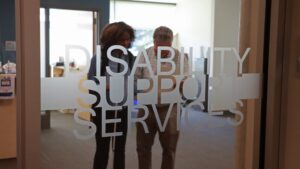
At Le Moyne, we welcome people with disabilities and emphasize the education of the whole person, the importance of service and leadership and the promotion of a more just society. Our accessibility and disability support office is here to help you navigate any challenge you face.
Did you have an IEP in high school? Or were you granted extra time for exams? We can help your services set up to make your college experience successful.
What Services Does the Disability Support Services (DSS) Office Provide?
Some of the ways we can offer students with learning, psychological, medical and/or physical (temporary or permanent) disabilities include:
- Providing and/or arranging academic accommodations
- Reviewing previously administered diagnostic tests
- Making referrals to appropriate diagnosticians
- Providing supplemental academic advising
- Assisting students in developing self-advocacy skills
- Providing liaison and advocacy measures between students and faculty


Visit Our Office in the Library
You can stop by any time, but it’s always good to make an appointment at dss@lemoyne.edu if you need to speak with someone.
DSS Hours
(Note: Evening hours start the third week of the semester.)
| Monday – Wednesday | 8:30 a.m. – 9 p.m. |
| Thursday – Friday | 8:30 a.m. – 4:30 p.m. |
Learn how to start working with us today!
Accommodations in the post-secondary setting refer to “academic adjustments and auxiliary aids” put in place to provide equally effective access to programs, benefits and services for qualified individuals with disabilities. The goal is to remove unnecessary academic barriers that intersect with the functional limitations of a disability. Accommodations are not intended to ensure academic success or lessen the student responsibilities to meet college-level standards, but rather utilize the same information shared with other students, so students with disabilities have the same opportunity to achieve as students without a disability.
Purpose of Accommodations
- To provide equal access, equal opportunity, and ensure non-discrimination. This allows students with disabilities to fully engage in the same activities, campus services, and enjoy the same benefits and experiences available to students without disabilities.
- To address barriers at the intersection of the disability and the environment.
- DSS is the starting point for all student accommodations.
Accommodations are:
Individualized
- Accommodations are based on specific needs of the person. Not a one-size-fits-all solution.
Effective, Not Excessive
- Must remove barriers to access, but not necessarily be the person’s ideal solution.
- The goal is to ensure equal opportunity, not guaranteed success.
Reasonable
- It must not impose an “undue hardship” on the institution or employer.
- Cannot fundamentally alter the nature of a program or service.
Accommodations in the post-secondary setting refer to “academic adjustments and auxiliary aids” put in place to provide equally effective access to programs, benefits and services for qualified individuals with disabilities. The goal is to remove unnecessary academic barriers that intersect with the functional limitations of a disability. Accommodations are not intended to ensure academic success or lessen the student responsibilities to meet college-level standards, but rather utilize the same information shared with other students, so students with disabilities have the same opportunity to achieve as students without a disability.
Purpose of Accommodations
- To provide equal access, equal opportunity, and ensure non-discrimination. This allows students with disabilities to fully engage in the same activities, campus services, and enjoy the same benefits and experiences available to students without disabilities.
- To address barriers at the intersection of the disability and the environment.
- DSS is the starting point for all student accommodations.
Accommodations are:
Individualized
- Accommodations are based on specific needs of the person. Not a one-size-fits-all solution.
Effective, Not Excessive
- Must remove barriers to access, but not necessarily be the person’s ideal solution.
- The goal is to ensure equal opportunity, not guaranteed success.
Reasonable
- It must not impose an “undue hardship” on the institution or employer.
- Cannot fundamentally alter the nature of a program or service.
- Academic: Provided in the classroom and/or in the testing environment to ensure that students with disabilities have equal access to educational materials. These accommodations do not provide an unfair advantage, but help to level the playing field by removing disability related barriers that might impact a student’s ability to learn.
- Dining: Accommodations in the dining hall or modifications to the campus meal plan system due to a disability related barrier. This accommodation falls under the medial housing accommodations request process.
- Housing: The purpose of housing accommodations is to address aspects of residential life that are inaccessible in relation to a student’s disability. The goal is to provide equal access in residential living for students with disabilities.
- Emotional Support Animal (ESA): An animal that provides comfort and emotional support to an individual with a disability in a residential setting. An ESA is not a pet. An ESA is prescribed by a licensed mental health professional to help alleviate symptoms of a mental health condition to provide equal access. If approved, ESA’s are only allowed in the student’s dorm room and no where else on campus. This accommodations falls under the Medical Housing Accommodation request process.
- Service Animals: A service animal is generally permitted to be on Campus property in any place where the animal’s handler is permitted to be, although there may be specific locations and activities on campus where all animals are prohibited, such as service preparation areas and areas where there is danger to the service animal. Exceptions to any such restricted area may be granted on a case-by-case basis as necessary. Students who wish to bring a service animal to campus are not required to request permission. Students are encouraged to connect with the DSS office in advance of the semester to ensure housing is suitable and any accessibility needs are met. Service dogs must be in compliance with all state and local health safety laws and regulations.
- Academic: Provided in the classroom and/or in the testing environment to ensure that students with disabilities have equal access to educational materials. These accommodations do not provide an unfair advantage, but help to level the playing field by removing disability related barriers that might impact a student’s ability to learn.
- Dining: Accommodations in the dining hall or modifications to the campus meal plan system due to a disability related barrier. This accommodation falls under the medial housing accommodations request process.
- Housing: The purpose of housing accommodations is to address aspects of residential life that are inaccessible in relation to a student’s disability. The goal is to provide equal access in residential living for students with disabilities.
- Emotional Support Animal (ESA): An animal that provides comfort and emotional support to an individual with a disability in a residential setting. An ESA is not a pet. An ESA is prescribed by a licensed mental health professional to help alleviate symptoms of a mental health condition to provide equal access. If approved, ESA’s are only allowed in the student’s dorm room and no where else on campus. This accommodations falls under the Medical Housing Accommodation request process.
- Service Animals: A service animal is generally permitted to be on Campus property in any place where the animal’s handler is permitted to be, although there may be specific locations and activities on campus where all animals are prohibited, such as service preparation areas and areas where there is danger to the service animal. Exceptions to any such restricted area may be granted on a case-by-case basis as necessary. Students who wish to bring a service animal to campus are not required to request permission. Students are encouraged to connect with the DSS office in advance of the semester to ensure housing is suitable and any accessibility needs are met. Service dogs must be in compliance with all state and local health safety laws and regulations.
Student Accommodation Request Process
Step 1: The student completes the student application and uploads their documentation into the AIM portal. A fully completed Healthcare Provider Form – Accessible Housing Request form is needed for all housing, dining and Emotional Support Animal request.
Step 2: DSS staff reviews the information submitted. DSS staff will contact the student via their Le Moyne College email address to request additional information, if needed.
Step 3: Once a completed student application and supporting documentation has been received and reviewed, DSS staff will contact the student via their Le Moyne College email account to schedule a 1-hour in-person intake appointment. Zoom appointments available upon request, if the student is not on campus.
Step 4: The student attends the intake appointment in the DSS office.
The process does not move forward until the Intake appointment has been completed.
Step 5: If eligible, academic accommodations will be agreed upon during the intake appointment. The student will receive instructions via email outlining the steps to electronically send the letter of accommodation to faculty within 48-hours of receiving the email instructions from DSS staff.
Step 6: Faculty and the student will schedule a 30-minute meeting within one week of sending the letter of accommodation. Student and Faculty will discuss the academic accommodations and identify plans surrounding those accommodations.
Step 7: Housing, ESA, & Meal Plan exemption requests only: The student’s accommodation request is presented to the Medical Housing Review Committee to determine eligibility. The committee meets 1x/week and decisions are sent out by Friday afternoons, after the committee meets. DSS staff will follow up with the student regarding the committee’s decision and next steps.
Student Accommodation Request Process
Step 1: The student completes the student application and uploads their documentation into the AIM portal. A fully completed Healthcare Provider Form – Accessible Housing Request form is needed for all housing, dining and Emotional Support Animal request.
Step 2: DSS staff reviews the information submitted. DSS staff will contact the student via their Le Moyne College email address to request additional information, if needed.
Step 3: Once a completed student application and supporting documentation has been received and reviewed, DSS staff will contact the student via their Le Moyne College email account to schedule a 1-hour in-person intake appointment. Zoom appointments available upon request, if the student is not on campus.
Step 4: The student attends the intake appointment in the DSS office.
The process does not move forward until the Intake appointment has been completed.
Step 5: If eligible, academic accommodations will be agreed upon during the intake appointment. The student will receive instructions via email outlining the steps to electronically send the letter of accommodation to faculty within 48-hours of receiving the email instructions from DSS staff.
Step 6: Faculty and the student will schedule a 30-minute meeting within one week of sending the letter of accommodation. Student and Faculty will discuss the academic accommodations and identify plans surrounding those accommodations.
Step 7: Housing, ESA, & Meal Plan exemption requests only: The student’s accommodation request is presented to the Medical Housing Review Committee to determine eligibility. The committee meets 1x/week and decisions are sent out by Friday afternoons, after the committee meets. DSS staff will follow up with the student regarding the committee’s decision and next steps.
Students can apply for accommodations at any time. If a request for accommodations is submitted after the deadline, reasonable efforts will be made by the DSS office to accommodate the request, but the DSS office can’t guarantee that accommodations will be approved and implemented prior to the semester starting.
Academic
- Before the semester: Apply (i.e. s submit an application & documentation and complete an intake appointment with DSS ) 2 weeks prior to the semester starting to have accommodations implemented before the semester begins.
- During the semester: Apply (i.e. submit an application & documentation and complete an intake appointment with DSS ) by Nov 15 for the Fall semester requests or April 15 for Spring semester requests to have accommodations implemented before the semester ends
Housing
- Returning students: Apply (i.e. submit an application & documentation and complete an intake appointment with DSS) by Jan 1 for Fall semester requests and apply by Nov 15 for Spring semester requests.
- Incoming Students: Apply (i.e. submit an application & documentation and complete an intake appointment with DSS ) by June 1 for Fall semester requests and apply by Nov 15 for Spring semester requests.
Meal Plan Exemptions
- Returning students: Apply (i.e. submit an application & documentation and complete an intake appointment with DSS) by Jan 1 for Fall semester requests and apply by Nov 15 for Spring semester requests.
- Incoming Students: Apply (i.e. submit an application & documentation and complete an intake appointment with DSS ) by June 1 for Fall semester requests and apply by Nov 15 for Spring semester requests.
Emotional Support Animal
- Returning students: Apply (i.e. submit an application & documentation and complete an intake appointment with DSS) by Jan 1 for Fall semester requests and apply by Nov 15 for Spring semester requests.
- Incoming Students: Apply (i.e. submit an application & documentation and complete an intake appointment with DSS ) by June 1 for Fall semester requests and apply by Nov 15 for Spring semester requests.
Students can apply for accommodations at any time. If a request for accommodations is submitted after the deadline, reasonable efforts will be made by the DSS office to accommodate the request, but the DSS office can’t guarantee that accommodations will be approved and implemented prior to the semester starting.
Academic
- Before the semester: Apply (i.e. s submit an application & documentation and complete an intake appointment with DSS ) 2 weeks prior to the semester starting to have accommodations implemented before the semester begins.
- During the semester: Apply (i.e. submit an application & documentation and complete an intake appointment with DSS ) by Nov 15 for the Fall semester requests or April 15 for Spring semester requests to have accommodations implemented before the semester ends
Housing
- Returning students: Apply (i.e. submit an application & documentation and complete an intake appointment with DSS) by Jan 1 for Fall semester requests and apply by Nov 15 for Spring semester requests.
- Incoming Students: Apply (i.e. submit an application & documentation and complete an intake appointment with DSS ) by June 1 for Fall semester requests and apply by Nov 15 for Spring semester requests.
Meal Plan Exemptions
- Returning students: Apply (i.e. submit an application & documentation and complete an intake appointment with DSS) by Jan 1 for Fall semester requests and apply by Nov 15 for Spring semester requests.
- Incoming Students: Apply (i.e. submit an application & documentation and complete an intake appointment with DSS ) by June 1 for Fall semester requests and apply by Nov 15 for Spring semester requests.
Emotional Support Animal
- Returning students: Apply (i.e. submit an application & documentation and complete an intake appointment with DSS) by Jan 1 for Fall semester requests and apply by Nov 15 for Spring semester requests.
- Incoming Students: Apply (i.e. submit an application & documentation and complete an intake appointment with DSS ) by June 1 for Fall semester requests and apply by Nov 15 for Spring semester requests.
- Students need to submit an application with documentation and complete an intake appointment with the DSS office before the pertinent deadlines. If a request for accommodations is submitted after this deadline, reasonable efforts will be made by the DSS office to accommodate the request, but the DSS office can’t guarantee that accommodations will be approved and implemented prior to the semester starting.
- Housing Accommodation requests: Any request (i.e. application & documentation submitted and intake completed with DSS) received after the pertinent deadlines will be considered, but the student (if approved) may be placed on a wait list.
- The AIM portal is the secure database used by the DSS office to store all disability related information.
- The AIM portal is where students will log in to send their letter of accommodation each semester, once approved for academic accommodations.
- Electronic communication with students will be done through the student’s Le Moyne College email.
- There are no 504 plans or IEP’s in college.
- Intake appointments are a mandatory step in the accommodation request process. The ADA requires colleges to engage in an interactive process when a person with a disability requests an accommodation. This is a collaborative dialogue between the student and the DSS office to identify a disability related barrier and reasonable accommodations to provide equal access.
- Not all accommodations received in K-12 transfer to post-secondary education.
- Students are required to self-identify and request accommodations in college. No one can do this on their behalf.
- Accommodations are not retroactive.
- Accommodations can’t be approved last minute or within 24-hours. Apply early!
- Students must complete the application process for both temporary and ongoing accommodations.
- A diagnosis doesn’t equal a disability. Students must qualify as a person with disability under the law to qualify for accommodations.
- The Medical Housing Review Committee meetings 1x/week and all decisions will be sent out by Friday afternoon each week.
- Students need to submit an application with documentation and complete an intake appointment with the DSS office before the pertinent deadlines. If a request for accommodations is submitted after this deadline, reasonable efforts will be made by the DSS office to accommodate the request, but the DSS office can’t guarantee that accommodations will be approved and implemented prior to the semester starting.
- Housing Accommodation requests: Any request (i.e. application & documentation submitted and intake completed with DSS) received after the pertinent deadlines will be considered, but the student (if approved) may be placed on a wait list.
- The AIM portal is the secure database used by the DSS office to store all disability related information.
- The AIM portal is where students will log in to send their letter of accommodation each semester, once approved for academic accommodations.
- Electronic communication with students will be done through the student’s Le Moyne College email.
- There are no 504 plans or IEP’s in college.
- Intake appointments are a mandatory step in the accommodation request process. The ADA requires colleges to engage in an interactive process when a person with a disability requests an accommodation. This is a collaborative dialogue between the student and the DSS office to identify a disability related barrier and reasonable accommodations to provide equal access.
- Not all accommodations received in K-12 transfer to post-secondary education.
- Students are required to self-identify and request accommodations in college. No one can do this on their behalf.
- Accommodations are not retroactive.
- Accommodations can’t be approved last minute or within 24-hours. Apply early!
- Students must complete the application process for both temporary and ongoing accommodations.
- A diagnosis doesn’t equal a disability. Students must qualify as a person with disability under the law to qualify for accommodations.
- The Medical Housing Review Committee meetings 1x/week and all decisions will be sent out by Friday afternoon each week.
Yes, if a student recognizes a need and has documentation, the student can seek accommodations at any time.
Yes, if a student recognizes a need and has documentation, the student can seek accommodations at any time.
No, accommodations provide equal access for a disability-related barrier. Students still need to study, complete assignments, utilize time management skills, and meet course requirements.
No, accommodations provide equal access for a disability-related barrier. Students still need to study, complete assignments, utilize time management skills, and meet course requirements.
No, IEP’s and 504 Plans end after High School and the Disability Laws change. Students need to self-identify as having a disability, contact the DSS office to request accommodations, and complete the application process to request accommodations in college.
No, IEP’s and 504 Plans end after High School and the Disability Laws change. Students need to self-identify as having a disability, contact the DSS office to request accommodations, and complete the application process to request accommodations in college.
It’s highly recommended that you do disclose your disability so you can receive services; however, no Le Moyne College student is required to disclose their disability.
If you choose not to disclose your disability, you’re not eligible to receive accommodations for your disability. If you want academic accommodations or accessibility aid, you must identify yourself as having a disability. If you are not in need of services, you may choose not to disclose your disability.
If you do disclose your disability, DSS must be given enough time to implement the accommodations. Some accommodations take significantly more time to arrange. Students should not wait until after receiving a poor grade in a class to disclose a disability.
It’s highly recommended that you do disclose your disability so you can receive services; however, no Le Moyne College student is required to disclose their disability.
If you choose not to disclose your disability, you’re not eligible to receive accommodations for your disability. If you want academic accommodations or accessibility aid, you must identify yourself as having a disability. If you are not in need of services, you may choose not to disclose your disability.
If you do disclose your disability, DSS must be given enough time to implement the accommodations. Some accommodations take significantly more time to arrange. Students should not wait until after receiving a poor grade in a class to disclose a disability.
No, Le Moyne doesn’t provide diagnostic testing services. It’s your responsibility to seek out and pay for independent testing. DSS can provide a reference list of area professionals who conduct private testing services.
“If a student with a disability is eligible for services through the state VR Services program, he or she may qualify for an evaluation at no cost.” – http://www2.ed.gov/about/offices/list/ocr/transition.html
No, Le Moyne doesn’t provide diagnostic testing services. It’s your responsibility to seek out and pay for independent testing. DSS can provide a reference list of area professionals who conduct private testing services.
“If a student with a disability is eligible for services through the state VR Services program, he or she may qualify for an evaluation at no cost.” – http://www2.ed.gov/about/offices/list/ocr/transition.html
DSS maintains the safety and privacy of our students’ records and follows the Registrar Records Retention Policy. Records are not released without your written permission.
DSS maintains the safety and privacy of our students’ records and follows the Registrar Records Retention Policy. Records are not released without your written permission.
Questions? We're Here to Help!
Michele Westphal
Non-Discrimination Statement
Le Moyne College welcomes people with disabilities and, in compliance with Section 504 of the Rehabilitation Act of 1973, as amended, and the Americans with Disabilities Act of 1990, does not discriminate on the basis of disability.
Le Moyne subscribes fully to all applicable federal and state legislation, and the office of Disability Support Services (DSS) conducts itself both in keeping with the law and with the college’s mission statement. Le Moyne emphasizes the education of the whole person, the importance of service and leadership, and the promotion of a more just society. Academic accommodations for students with disabilities are coordinated by the office of Disability Support Services.
Le Moyne College does not discriminate on the basis of race, color, gender, creed, age, disability, marital status, sexual orientation, veteran status, or national or ethnic origin.
Le Moyne College is an Affirmative Action/Equal Opportunity Employer.
For other inquiries relative to the regulations mentioned above may be addressed to Shaun Crisler, Associate Provost of Student Development, at 315-445-4525.
