

Astrophysics

Curious about how the universe works—from the life cycles of stars to the structure of galaxies? The Astrophysics minor at Le Moyne College offers students a rigorous, quantitative pathway to explore the science behind the cosmos.
Built on calculus-based physics and advanced mathematics, the program provides the analytical tools and problem-solving skills needed to understand complex astronomical phenomena. Students move beyond introductory astronomy to examine the physical laws that shape our universe—developing the kind of deep scientific insight valued in research, technology, and advanced study.
Exploration Beyond The Heights
Look beyond the night sky and start asking bigger questions.
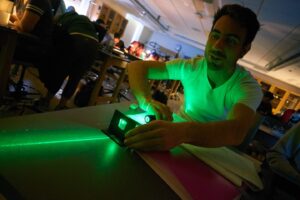
The Astrophysics Minor
The minor pairs especially well with majors in physics, mathematics, computer science, and chemistry, as well as the pre-engineering concentration. It’s an excellent option for students who want to strengthen their quantitative skills while expanding their understanding of the universe.

Astrophysics Courses
You'll move from exploring the solar system and distant galaxies to hands-on laboratory and observational experiences, deeping your understanding through advanced astrophysics study.

Additional Minors
Studying physics at Le Moyne gives you a scientific edge with a liberal arts core.

From Classroom to Career
95% of Le Moyne graduates are employed or in graduate school within six months. That’s the result of intentional mentorship, hands-on internships, and personalized career guidance that begins in your first year and continues through graduation.
Our faculty members have wide-ranging professional and research interests.
Astrophysics Careers & Median Salaries
$166,290 Physicist / Astronomer
$78,980 Physical Scientist
$140,910 Research Scientist
$108,020 Data Analyst / Data Scientist
$120,000 Engineer
$166,290 Physicist / Astronomer
$78,980 Physical Scientist
$140,910 Research Scientist
$108,020 Data Analyst / Data Scientist
$120,000 Engineer


The Jesuit mission shines in our work on the flight control team—we serve the crew by ensuring their safety in orbit. More broadly, the ISS program advances global innovation through new technologies and scientific discoveries. It’s an honor to be part of the team that keeps the station running.”
Questions? Get in Touch

