

From Inspiration to Impact: Meet Collin Faulkner PA ’26
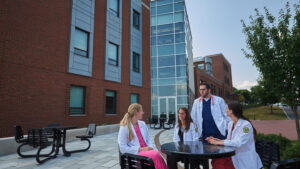
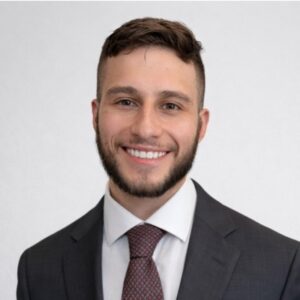 Collin Faulkner PA ’26 knew from an early age that he wanted to build a career that would both challenge him and allow him to help others, and zeroed in on the healthcare field fairly quickly. However, from there things grew more nebulous. There were so many options from which to choose. A Central New York native, Faulkner considered becoming a dietician, a physical therapist and a physician. Then he learned about the work physician assistants do – evaluating, diagnosing, treating and educating their patients. He felt confident he’d discovered a role that would allow him to make the impact on others he’d long envisioned.
This August Faulkner will graduate from Le Moyne’s Department of Physician Assistant Studies, after which he will begin work as a primary care provider in Rome, New York, 45 miles east of Syracuse. He looks forward to establishing a rapport with his patients in this medically underserved area, and to helping them live as healthfully as possible, whether that is with the adoption of simple lifestyle changes or more aggressive medical interventions. He knows that in order to achieve that aim, it is critical that he establish trust with his patients, and that begins with ensuring that they feel heard and understood. He credits his time at Le Moyne with preparing him to do just that.
From my first conversation with [Physician Assistant Studies Program Director] Patrick Nappi, DM Sc, it was clear to me that Le Moyne cares about his students. I felt confident that my professors would prepare me well for the work I will be doing, and that they would be there for me when I needed them. Likewise, I want my patients to know that I will be there whenever they need me.”
This is an exciting time to be entering the healthcare field, Faulkner says. Using AI for tasks such as scribing frees up time for providers to focus on other aspects of their work, and there is a renewed awareness of the social determinants of health, from a patient’s economic stability to the level of support he or she has from family and friends. Conversely, though, it can cause problems when a patient tries to use AI to diagnose him- or herself, and it can impede the caregiver/patient relationship if a clinician does not recognize that not everyone has access to quality care, reliable transportation or even nutritious food. For his part, Faulkner plans to build a relationship with his patients that is collaborative and rooted in communication.
Take a Deeper Dive

Inspired by Collin's Story?
A first-generation college student, Faulkner benefited from the College’s Healthcare Opportunities for Professional and Educational Success (HOPES) program. Funded by the New York State Department of Health, HOPES addresses barriers that can accompany advanced healthcare training, including financial, academic, cultural, and logistical challenges, so that students are better positioned to persist, graduate and enter professional practice.